
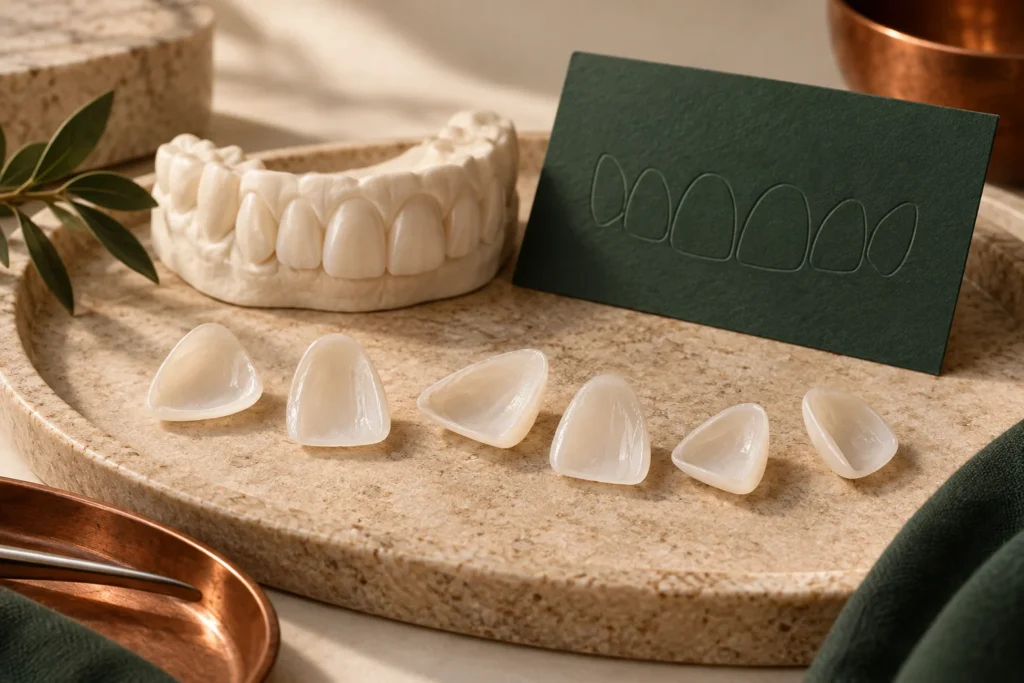
Veneers are one possible treatment within a smile makeover; a smile makeover is the broader, personalised plan that may combine whitening, bonding, orthodontics, gum care, crowns or veneers. The right approach depends on tooth health, bite, proportions and your goals, not on copying a standard celebrity smile.
At Smile Avenue in Umm Suqeim, cosmetic dentistry begins with diagnosis and conservative planning. This comparison explains when veneers may be appropriate, when a broader plan is useful and what to ask before treatment.
What are dental veneers?
Veneers are thin restorations bonded mainly to the visible front surface of teeth. They can change colour, shape, proportion or symmetry. Porcelain veneers are laboratory-made; direct composite veneers or bonding are created with tooth-coloured resin.
Veneers may help with selected concerns such as worn edges, resistant discoloration, small gaps, minor shape irregularities or uneven proportions. They are not a universal solution for unhealthy teeth, active gum disease or every bite problem.
What is a smile makeover?
A smile makeover is a coordinated treatment plan rather than a single procedure. It considers the teeth, gums, lips, facial proportions, bite and long-term maintenance. A conservative plan might involve whitening and edge bonding; a more complex plan may include orthodontics, gum contouring, crowns, implants or veneers.
The advantage is sequencing: each treatment supports the next instead of addressing appearance in isolation.
Veneers vs. smile makeover: the main differences
Scope
Veneers change selected tooth surfaces. A smile makeover evaluates the entire visible smile and may use several techniques.
Tooth preparation
Some veneers require enamel preparation; others may need minimal reduction, depending on tooth position, colour and material. A smile makeover can include non-invasive options and does not automatically mean veneers on many teeth.
Problems addressed
Veneers mainly change visible tooth appearance. A makeover can also address alignment, missing teeth, gum symmetry, bite function and tooth wear.
Timeline and investment
Both vary significantly. Whitening and bonding may be completed relatively quickly, while orthodontics or implant treatment can extend a makeover over months. A written plan should separate essential health treatment from elective cosmetic choices.
Who may be suitable for veneers?
- Healthy teeth and stable gums
- Adequate enamel for predictable bonding
- Cosmetic concerns not better treated by whitening or orthodontics alone
- A manageable bite and grinding risk
- Realistic expectations about colour, shape and maintenance
If teeth are heavily filled, cracked or structurally weakened, a crown or another restoration may be more appropriate. If teeth are crowded or protrusive, orthodontic alignment may reduce the amount of preparation required.
How a natural smile is planned
Health and bite assessment
Decay, gum inflammation and functional concerns are addressed first. Photographs, scans and appropriate imaging help evaluate tooth position and available space.
Design discussion
You and the dentist discuss shade, texture, edge position and the features you want to retain. Natural smiles contain individual variation; overly uniform teeth may not suit every face.
Preview and consent
Where suitable, digital planning or a trial mock-up can help communicate the proposed result. A preview is a planning aid, not a guarantee.
Treatment and review
The approved plan is delivered in stages. Bite, speech, hygiene and appearance are reviewed before and after final placement.
Benefits, risks and alternatives
Veneers can provide durable colour and shape changes with a highly aesthetic finish. Limitations include irreversible enamel preparation in many cases, potential sensitivity, chipping, debonding, gum changes and future replacement. Grinding may require a protective night guard.
Alternatives can include professional whitening, composite bonding, orthodontics, gum treatment or accepting natural variation. A responsible cosmetic consultation explains these options before recommending treatment.
Aftercare
- Brush and clean between teeth daily
- Attend gum-health and restoration reviews
- Avoid using teeth to open packaging or bite very hard objects
- Wear a prescribed night guard if you grind
- Report persistent sensitivity, movement or bite discomfort
Frequently asked questions
Does a smile makeover always include veneers?
No. It may involve whitening, bonding, orthodontics or gum care without veneers.
How many veneers do I need?
There is no standard number. It depends on the teeth visible in your smile, the concern being treated and how transitions with untreated teeth can look natural.
Can veneers stain?
Porcelain is relatively stain resistant, but margins, natural teeth and composite materials can change over time. Hygiene and dietary habits remain important.
Are veneers reversible?
If enamel is removed, treatment is generally not reversible. Future maintenance or replacement should be part of informed consent.
Plan cosmetic dentistry around your smile
Explore veneers and our smile makeover service. Smile Avenue provides cosmetic and restorative planning in Umm Suqeim, Dubai. Book a consultation to review suitable conservative options.
