
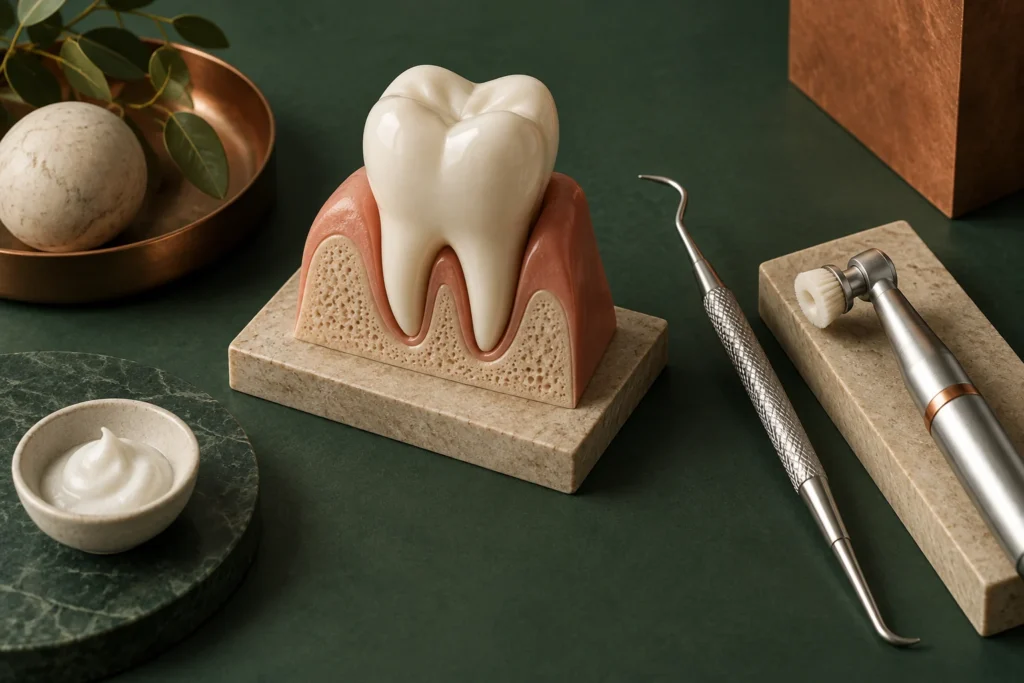
A routine dental cleaning and a deep cleaning are not two versions of the same appointment. A routine cleaning supports prevention when the gums are generally healthy, while deep cleaning—usually called scaling and root planing—is used when plaque and hardened deposits extend below the gumline and gum disease requires treatment.
The right option depends on an examination, gum measurements and, when clinically appropriate, dental imaging. This guide explains the difference for patients in Dubai, but it cannot determine which treatment you personally need.
Quick answer: routine cleaning vs. deep cleaning
A routine professional cleaning removes plaque, tartar and surface stains from accessible tooth surfaces, especially around and just above the gumline. It is commonly part of preventive care alongside a dental examination.
A deep cleaning reaches below the gumline. Scaling removes deposits from tooth and root surfaces inside periodontal pockets, while root planing smooths affected root surfaces to support healing and make plaque control easier.
The American Dental Association describes scaling and root planing as treatment below the gumline for gum disease. The CDC likewise lists deep cleaning among the non-surgical treatments that may be used for periodontitis.
What happens during a routine dental cleaning?
During a routine cleaning, the dental professional removes plaque and calculus that daily brushing and interdental cleaning cannot fully remove. The teeth may then be polished, and the team can identify areas where home care could improve.
A routine appointment may include:
- Review of your dental and medical history
- Assessment of the teeth, gums and existing restorations
- Removal of plaque and tartar from accessible surfaces
- Polishing when appropriate
- Personalized brushing and interdental-cleaning advice
- A recommended recall interval based on your risk
Professional cleaning supports prevention, but it does not replace daily brushing, cleaning between the teeth or a clinical examination.
What is deep cleaning or scaling and root planing?
Deep cleaning is a treatment rather than a cosmetic upgrade. It is considered when gum inflammation and periodontal pockets allow bacterial deposits to remain below the gumline. These areas cannot be reached effectively with a toothbrush at home.
Scaling removes plaque and calculus above and below the gumline. Root planing addresses deposits and roughness on affected root surfaces. Depending on the areas involved and your comfort needs, treatment may be completed in sections over more than one appointment and local anaesthetic may be used.
According to the CDC overview of periodontal disease, gingivitis can often be managed with home care and professional cleaning, whereas periodontitis may require scaling and root planing and ongoing professional management.
How does a dentist decide which cleaning you need?
The decision should be based on diagnosis, not simply on how stained the teeth look. Your dentist may consider:
- Bleeding, swelling and inflammation around the gums
- The depth of spaces between the teeth and gums
- Calculus detected above or below the gumline
- Gum recession or changes in tooth support
- Mobility, bite changes or persistent bad breath
- Bone levels on suitable dental images when imaging is indicated
- Risk factors such as smoking, diabetes history and previous periodontal disease
Some patients need routine preventive cleaning, some need localized deep cleaning, and others require a broader periodontal plan. A professional assessment prevents both undertreatment and unnecessary treatment.
Signs that your gums should be assessed
Arrange a dental assessment if you notice gums that bleed repeatedly, persistent swelling, tenderness, recession, bad breath that does not improve, pus, tooth movement or a change in the way your teeth meet. Gum disease can also progress with few obvious symptoms, which is why regular examinations matter.
If you have facial swelling, fever, severe pain, difficulty swallowing or rapidly worsening symptoms, seek prompt professional advice. Breathing or swallowing difficulty requires emergency medical attention.
Does deep cleaning hurt?
Comfort varies with inflammation, sensitivity and the number of areas being treated. Local anaesthetic may be recommended. After treatment, temporary tenderness, gum sensitivity or sensitivity to temperature can occur. Your clinician will explain appropriate aftercare based on your health and the treatment completed.
Do not start antibiotics, medicated rinses or pain medication that was prescribed to someone else. Use only products that are suitable for you and follow the instructions provided by your dentist or pharmacist.
What happens after deep cleaning?
A review appointment is important because treatment success is assessed by healing, plaque control, bleeding and periodontal measurements—not only by whether the teeth feel smoother. Some patients need periodontal maintenance at shorter intervals than routine recall visits.
- Brush twice daily with an appropriate technique
- Clean between the teeth every day
- Follow individualized advice for brushes, floss or interdental brushes
- Avoid tobacco
- Manage relevant health conditions with your medical team
- Attend the recommended review and maintenance schedule
Frequently asked questions
Can I choose deep cleaning instead of a routine cleaning?
Deep cleaning should be based on periodontal findings. More treatment is not automatically better. The aim is to provide the level of care supported by your examination and diagnosis.
Is deep cleaning the same as teeth whitening?
No. Deep cleaning treats deposits and inflammation below the gumline. Professional teeth whitening is an aesthetic treatment intended to lighten tooth shade after suitability has been assessed.
How many deep-cleaning visits are needed?
That depends on how many areas are affected, your comfort, medical considerations and the treatment plan. Some cases are localized, while others are completed by sections over multiple visits.
Will deep cleaning reverse all gum recession or bone loss?
It can help control disease and support healthier tissues, but existing recession or bone loss does not always return to its previous level. Your dentist will explain realistic goals and whether specialist periodontal care is appropriate.
How often should I have a routine cleaning?
There is no single interval for everyone. Your dentist should recommend a schedule based on gum health, decay risk, medical history, home care and previous treatment.
Book a gum-health assessment in Umm Suqeim
If you are unsure whether you need routine cleaning or treatment for gum disease, start with an examination. Learn about gum disease care at Smile Avenue, call +971 4 583 7999, or request an appointment online. Treatment recommendations are made after an individual clinical assessment.
