
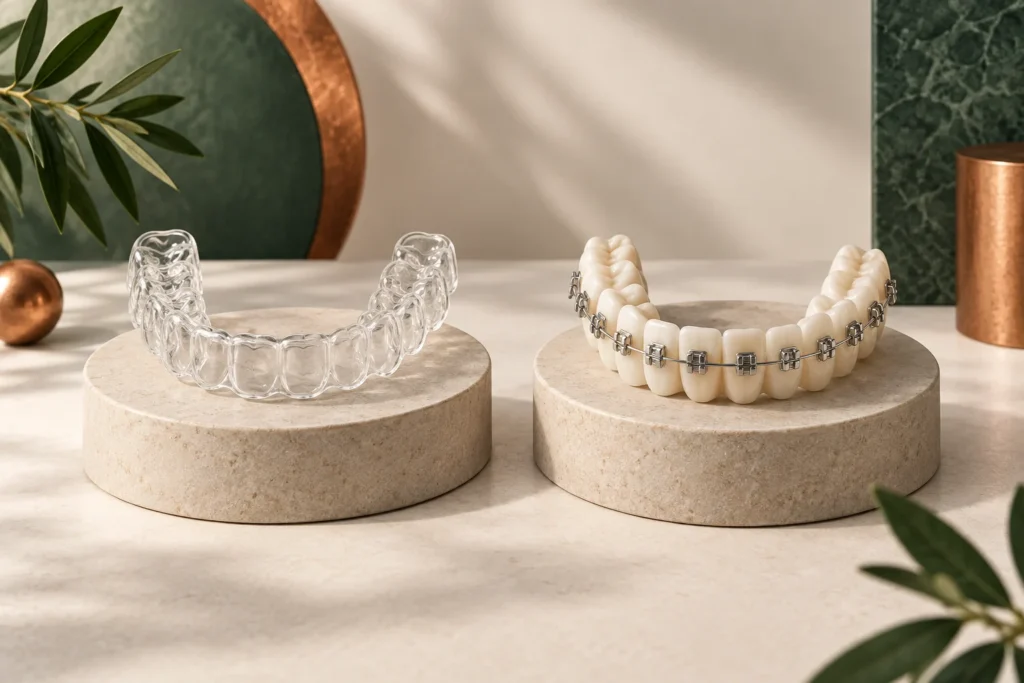
Invisalign clear aligners and fixed braces can both straighten teeth, but the better choice depends on your bite, the movements required, your lifestyle and how consistently you can follow the treatment plan. Appearance matters, but it should not replace a complete orthodontic diagnosis.
At Smile Avenue in Umm Suqeim, orthodontic planning begins with an assessment of tooth position, jaw relationship, gum health and treatment goals. This guide helps you compare the two options before an in-person consultation.
Invisalign and braces at a glance
Invisalign uses a sequence of removable clear aligners. Each aligner applies controlled pressure to guide planned tooth movement. Fixed braces use brackets and an archwire, allowing continuous control without relying on the patient to insert the appliance.
The American Association of Orthodontists notes that both clear aligners and braces are orthodontic tools; diagnosis and professional supervision determine which can safely achieve the intended result. Read the AAO patient comparison.
Who may prefer Invisalign?
- Patients who want a discreet appliance
- People able to wear aligners for the prescribed daily time
- Those who value removing the appliance for meals and cleaning
- Suitable mild, moderate and selected complex orthodontic cases
- Adults and responsible teenagers who can manage aligner routines
Aligners must be removed for eating and most drinks, cleaned correctly and stored safely. Inconsistent wear can slow progress or reduce predictability.
When may braces be the stronger option?
- Cases requiring precise control of difficult tooth movements
- Patients who may struggle with aligner wear discipline
- Situations where fixed appliances give the orthodontist more continuous control
- Patients comfortable with visible or more discreet ceramic bracket options
Modern braces are more refined than older systems, but cleaning around brackets requires careful technique. Your orthodontist may recommend special brushes or other hygiene aids.
Comfort, appearance and daily life
Appearance
Clear aligners are less noticeable in everyday conversation and photographs. Braces remain visible, although ceramic options can appear subtler. Treatment quality should still take priority over appliance visibility.
Comfort
Both systems create pressure as teeth move. Aligners may cause temporary tightness with a new set, while brackets can irritate cheeks or lips initially. Persistent pain, damaged appliances or unexpected bite changes should be reported.
Eating
Aligners are removed for meals, so there are fewer food restrictions, but teeth should be cleaned before reinsertion. With braces, very hard or sticky foods may damage brackets and wires.
Oral hygiene
Aligners allow normal brushing and flossing after removal. Braces require additional attention around brackets. In either case, poor hygiene can lead to decay, gum inflammation or visible enamel marks.
How the treatment process works
Orthodontic assessment
The clinician examines alignment, bite, jaw function and gum health. Digital records, photographs and appropriate imaging support diagnosis. Treatment should not begin from an online impression alone.
Personalised plan
You receive an explanation of realistic goals, appliance options, estimated duration, responsibilities, fees and retention. Some cases may need attachments, elastics, tooth reshaping or extractions regardless of the appliance type.
Active treatment
Reviews monitor progress. Aligners are changed according to the prescribed schedule; braces are adjusted periodically. Missed visits, broken appliances or inconsistent wear can extend treatment.
Retention
Retainers are essential after either option because teeth can move again. The type and duration of retention are personalised.
Risks and limitations
Orthodontic treatment can involve temporary discomfort, gum irritation, enamel damage where hygiene is inadequate, root changes, relapse or a result that differs from the digital preview. Existing gum disease should be stabilised. Tell your orthodontist about jaw pain, previous trauma and medical conditions.
Frequently asked questions
Is Invisalign faster than braces?
Not automatically. Duration depends on complexity, biological response, appointment attendance and aligner compliance. A simple case can be shorter than a complex one with either appliance.
Can Invisalign correct bite problems?
It can treat many bite concerns, sometimes with attachments or elastics. Certain movements may be more predictable with braces or a combined approach.
Can I switch from braces to aligners?
Sometimes, but the decision depends on treatment progress, remaining movements and clinical priorities. A new assessment and plan may be required.
Do I still need retainers?
Yes. Retainers are required after Invisalign and braces to protect the corrected position.
Which option is right for you?
The best choice is the appliance that can deliver your clinical goals safely and that you can manage consistently. Dr. Khaled Abualroos provides specialist orthodontic care at Smile Avenue. Explore our Invisalign service, review the shorter comparison page, or book an orthodontic consultation.
